 Socrates WineThe course
You know wine.Learn to read it.
Eight short lessons on reading a glass the way a careful taster does: what to look at, what to smell for, what to feel on the first sip, and which single tell separates two grapes that look alike.
What the label actually promises
Before the glass, the bottle makes a claim. Knowing what it is legally allowed to say tells you how much to trust it.
Wine labels come in two kinds. Some name the grape ("Pinot Noir", "Sauvignon Blanc"). Others name the place ("Barolo", "Sancerre", "Rioja"), and the place's own rules decide which grapes are allowed in.
A US label says "Cabernet Sauvignon". Is it all Cabernet?+
Not necessarily. In the US the named grape must be at least 75% of the wine; much of Europe asks for 85%. The rest can be anything.
So read the glass, not the word. A soft, plush "Cabernet" may carry a fair share of Merlot.
The label just says "Sancerre". Which grape is in the bottle?+
Sauvignon Blanc, for a white Sancerre. The place name stands in for the grape because the region's rules fix it. Learn the classic places and you can read a label with no grape on it.
"Reserve" on an American label: what does it guarantee?+
Nothing, legally. In the US it's a marketing word. In some European places it does mean longer aging, set by that place's rules.
A grape name is a majority, not a promise. A place name is a rulebook. Your glass is the evidence.
The same order, every glass
Look, smell, structure, taste, then the reveal. The order matters because each step narrows the field before the next one can fool you.
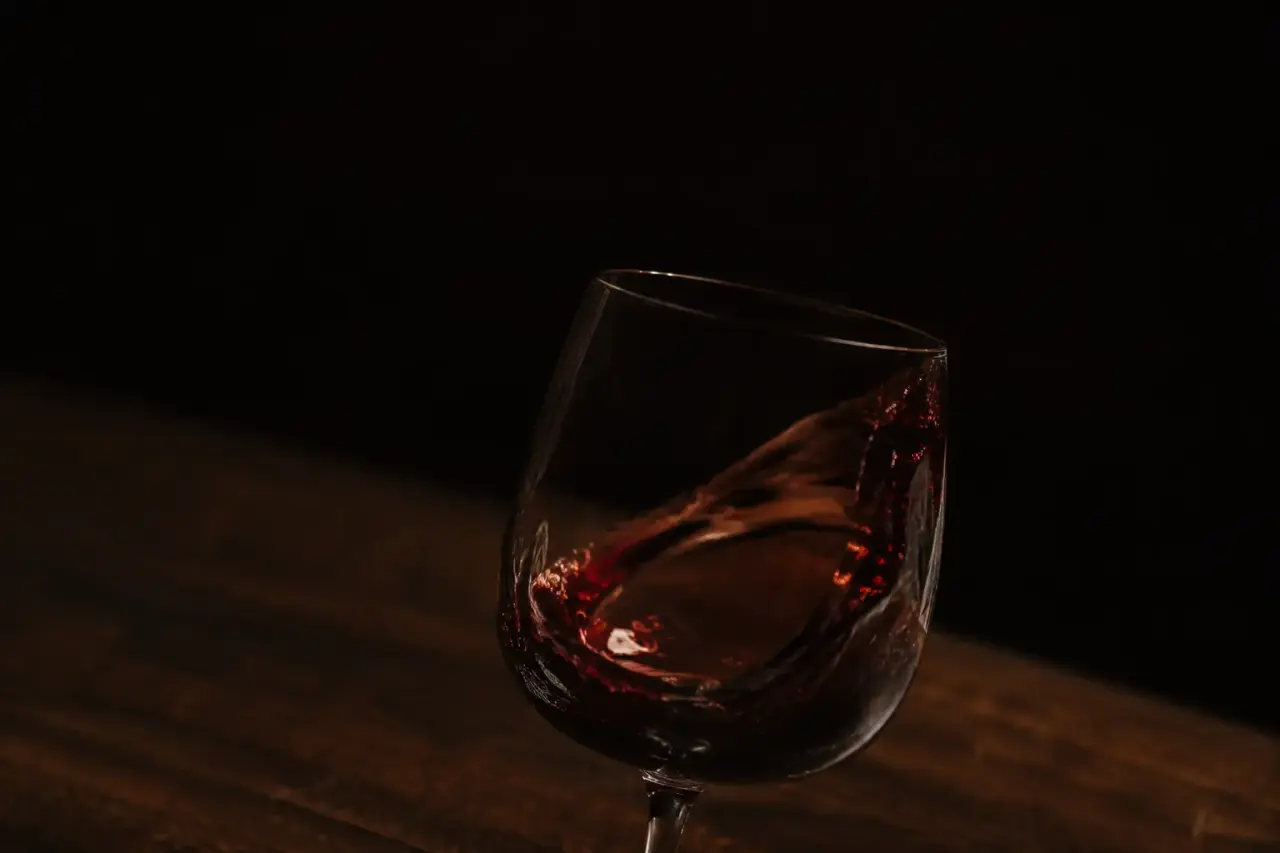
Why look at the color before you smell anything?+
Because color is a constraint, not an opinion. An inky purple glass has already ruled out the pale, thin-skinned grapes before your nose says a word.
Why swirl the glass before you smell it?+
To lift the aroma. Swirling spreads the wine thin on the glass so more of it can evaporate toward your nose. Short, gentle sniffs beat one deep inhale.
Why write down your read before you know what it is?+
So you can be wrong on purpose. A read you commit to can be graded; a read made after the answer can't teach you anything.
Look · smell · structure · taste · reveal. Commit each read before the next step.
Look: depth, hue and the rim
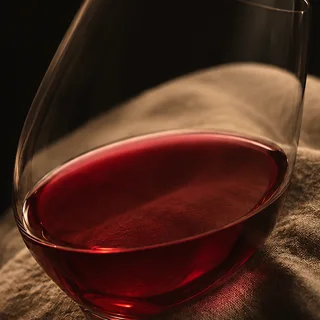
Tilt the glass over something white and read two things: how deep the color runs at the center, and what color it turns at the thin edge.
 Pale ruby
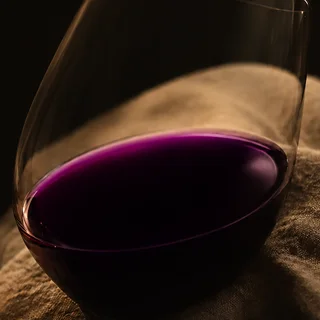 Inky purple
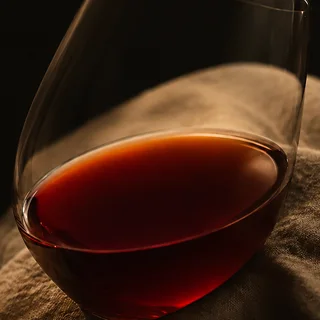 Garnet
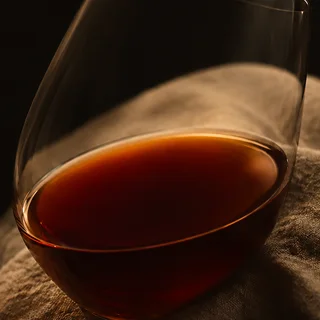 Brick
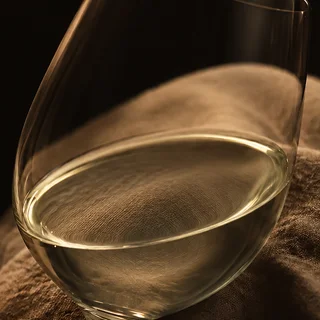 Water-white
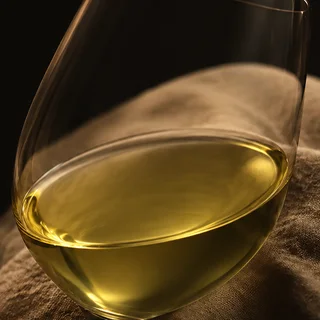 Lemon
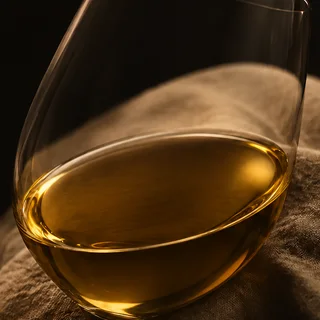 Gold
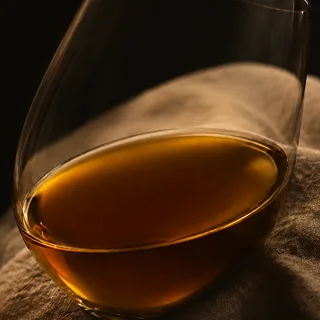 Amber
You can read print through a red wine's core. Thin-skinned grape or thick?+
Thin-skinned, most likely. Pinot Noir, Gamay, Nebbiolo and Grenache stay see-through. Cabernet, Syrah and Malbec usually go opaque.
The rim is purple. The rim is brick. What changed?+
Mostly time. Young reds hold purple at the edge; as they age the rim moves through ruby to garnet to brick.
One exception worth knowing: Nebbiolo can show garnet or brick even when young. Color alone can't date it.
A white is deep gold. Name two things that could have done it.+
Oak, or age (or sweetness). Young unoaked whites stay pale; barrel aging, years in bottle, or a sweet, rich style push them toward gold.
Depth says the grape's skin. The rim says the wine's age. Read the edge, not the middle.
Smell: the notes that describe, and the notes that decide
Most of what you smell is shared by many wines: red fruit, dark fruit, vanilla from oak. A few notes belong to only a handful of grapes. Those are the ones to hunt.
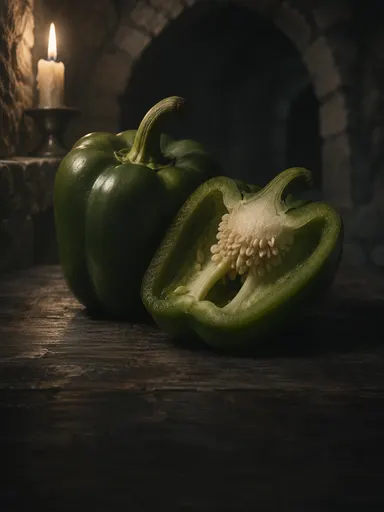 Green bell pepper
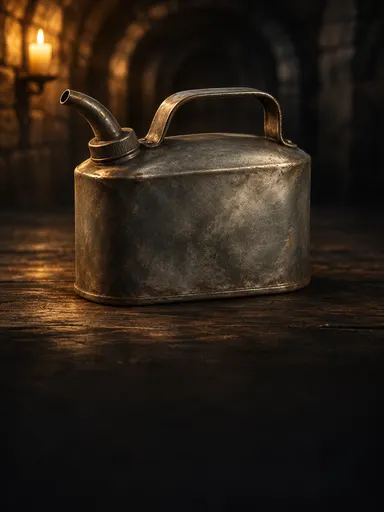 Petrol
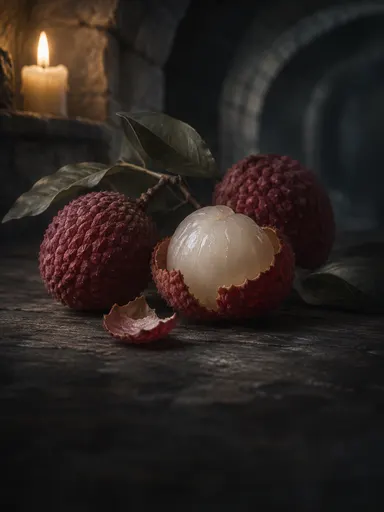 Lychee
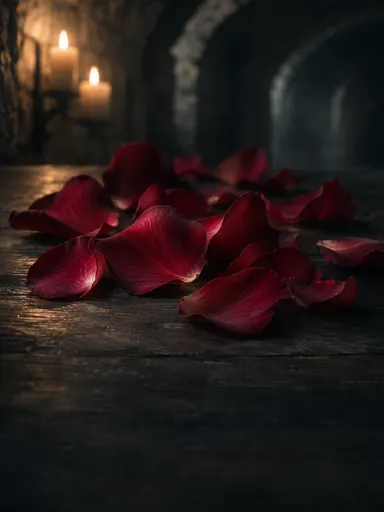 Rose petal
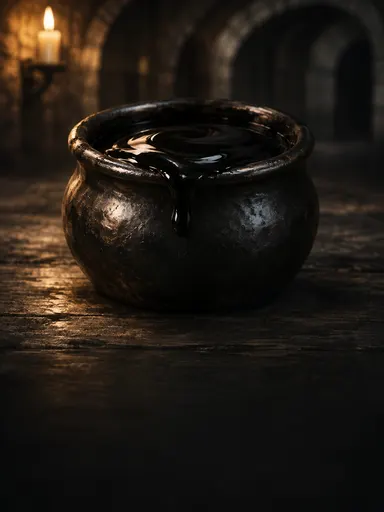 Tar
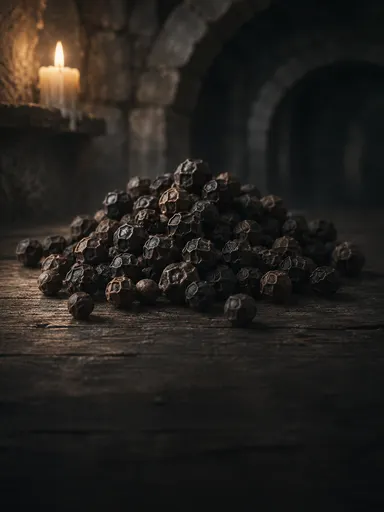 Black pepper
Green bell pepper in a red. Which family should you suspect?+
The Cabernet family. Cabernet Sauvignon and Cabernet Franc carry that green note; in whites, Sauvignon Blanc shares it as cut grass.
An older white smells faintly of petrol. Fault, or fingerprint?+
Fingerprint. A petrol note on a white with age is classic Riesling.
Lychee and rose, very perfumed. Which white grape?+
Gewürztraminer. Few grapes are that floral and that exotic at once.
A pale red smells of rose and tar. Pinot Noir?+
More likely Nebbiolo. Pinot gives red fruit and earth; rose and tar together are Nebbiolo's signature, and the first sip will grip far harder.
Fruit and vanilla describe. Pepper, petrol, lychee, rose-and-tar, green pepper decide. Hunt the second kind.
The first sip: four instruments
Before flavor, read the wine's frame. These four are the hardest things for a wine to fake, and two grapes that smell alike often split here.
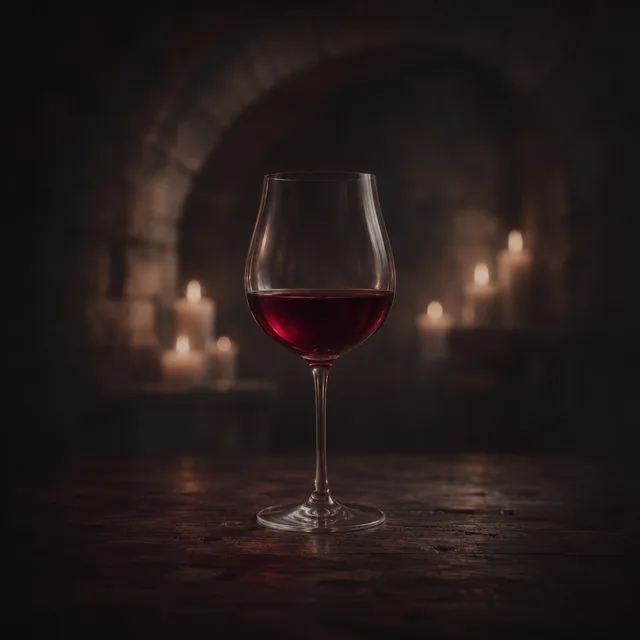
Acid: does your mouth water after you swallow? Tannin: do your gums feel dry, like strong tea? Body: is it water, skim milk, whole milk or cream on the tongue? Sweetness: is it sugar, or just ripe fruit on a dry wine?
It smells of ripe, sweet fruit. Is the wine sweet?+
Probably not. Fruit is a smell; sweetness is sugar on the tongue. Most ripe-smelling wines are bone dry.
Pale, see-through, but your gums go dry and stay dry. What's surprising?+
The grip doesn't match the color. Pale reds are usually gentle. Pale plus fierce tannin points to Nebbiolo.
Your mouth keeps watering for a long count. High acid or low?+
High. That points toward cooler places and grapes like Riesling, Sauvignon Blanc, Sangiovese and Pinot Noir.
Mouth-watering = acid. Gum-drying = tannin. Weight = body. Sugar ≠ fruit.
The grapes and their tells
Every grape has a fingerprint, and an absence rule: what it never does. "No grip at all" rules out Cabernet. "Not see-through" rules out Pinot. Absences are as useful as presences.
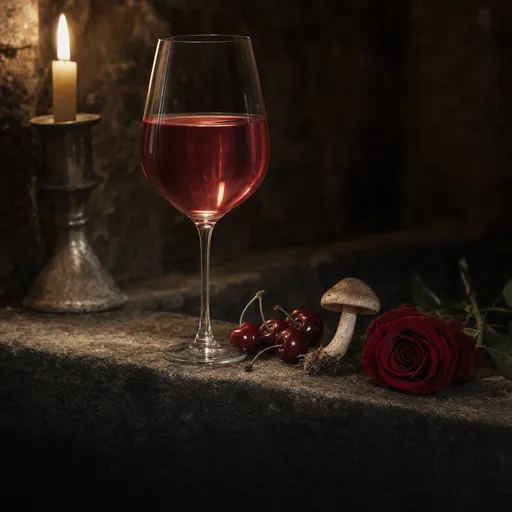 Pinot Noir
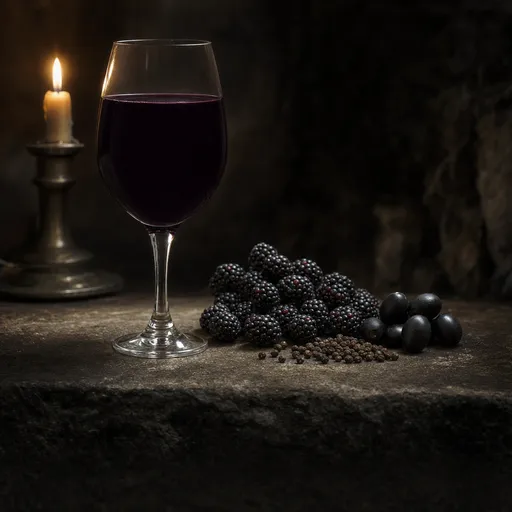 Syrah
Pinot Noir: pale and see-through, red cherry and earth, high acid, silky tannin. Syrah: inky, dark fruit, black pepper, firm grip. Both red, opposite reads.
Every grape has one tell and one thing it never does. Learn both, and the near-miss stops fooling you.
Cool places, warm places, and oak
The same grape reads differently depending on where it grew and what it was aged in. Learn the direction of each change, and you can read the place in the glass.
Cooler climate, same grape. Which way do acid and fruit move?+
Acid up, fruit fresher and less ripe, alcohol lower. A cool-climate Chardonnay is lean and citrusy; a warm one is riper and rounder.
Vanilla, toast and coconut. The grape, or the barrel?+
The barrel. New oak adds them to almost any grape. Note them, then look past them for the grape's own tell.
"Old World" and "New World": what does the shorthand usually mean in the glass?+
Earthier and leaner versus riper and more fruit-forward. It's a tendency, not a rule; plenty of wines cross the line both ways.
Cool = more acid, fresher fruit. Warm = riper fruit, more body. Oak = vanilla and toast, on top of the grape.
Your first Guided Pour
Now read a glass with Socrates. He holds the public record on the grape; you make the calls, step by step, and the reveal shows what you caught and the one tell that separates it from its nearest look-alike.
Why start with Pinot Noir?+
Because its tells are clear. Pale, see-through, high acid, silky: every lesson above shows up in one glass, and its near-miss, Gamay, teaches the first discriminator.
No Pinot open tonight?+
Read any glass, or read from memory. Name whatever you have; if the public record on that bottle is thin, Socrates reads the grape and says so.